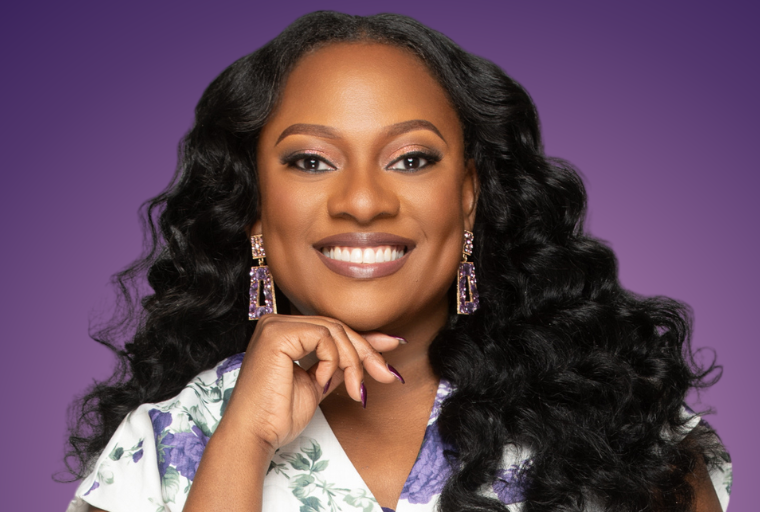
Part of The Deep Dive, a series of interviews with people on work, life and mental health. A conversation with career development strategist and founder of She Leads Beautifully, Dr. Uzoma F. Obikide, on career reinvention, authentic connection, family and recognizing your career seasons.
I love connecting with others and learning from them — but large conferences aren't usually my preferred format for either.
I say “preferred” with intention, because it's not that I'm shy. As someone with a neurodivergent brain, it's a matter of overwhelm for me; huge ballrooms, echoing acoustics, large crowds, and unstructured small talk are just a lot to process.
As such, it's rare that I connect with someone at these events beyond a quick “what do you do?” and a business-card exchange, because by the time I'm talking to someone, I've already used most of my capacity simply being in the room.
The biggest exception to this pattern for me, though, was meeting Dr. Uzoma Obidike.
In 2024, when I worked in higher education career services, I attended the National Association of Colleges & Employers Annual Conference in Phoenix, Arizona. Uzoma and I met after one of the conference panels. We quickly learned that we'd both recently completed doctoral programs, and exchanged information so we could stay in touch. Her genuine, welcoming presence shone through, so it was no surprise to learn, in that same conversation, that one of her CliftonStrengths is Includer.
She sent me a voice message on LinkedIn shortly after the NACE conference (which I didn't even know was something you could do on LinkedIn!) and I kept up on what she'd been doing ever since.
This year, Uzoma launched the Rose Advisory Collective, a 10-week cohort-based community for high-impact women across industries and backgrounds, through her career development practice, She Leads Beautifully. Everyone comes in with a specific goal they want to achieve by the end of the 10 weeks. While we take action toward our goals individually, we come together to discuss our progress, run ideas past each other, and encourage each other to keep going.
My doctoral program ran on a cohort model, and I really enjoyed getting to know people who were working on completely different goals in different industries but facing similar problems. The collective wisdom of the group led to more innovative ideas and a deeper understanding of the challenges that persist regardless of context. So, learning that the Rose Advisory Collective was structured similarly intrigued me.
I was fortunate to be part of the founding cohort in April. My goal for the 10 weeks was to submit a book proposal. I didn't quite hit the goal — but only because the group's feedback reshaped the direction into something stronger. I was also able to sustain progress once the cohort wrapped up in June, and I've continuously been working on it ever since.
When Uzoma invited me back for the second iteration a few weeks ago, I joined again with zero hesitation. My goal is, on paper, the same — to submit the book proposal — but this time I'm confident I'll achieve it with an even stronger submission thanks to the Roses.
I hope you enjoy this conversation with Uzoma and feel included in the same way I did when I met her back in 2024!
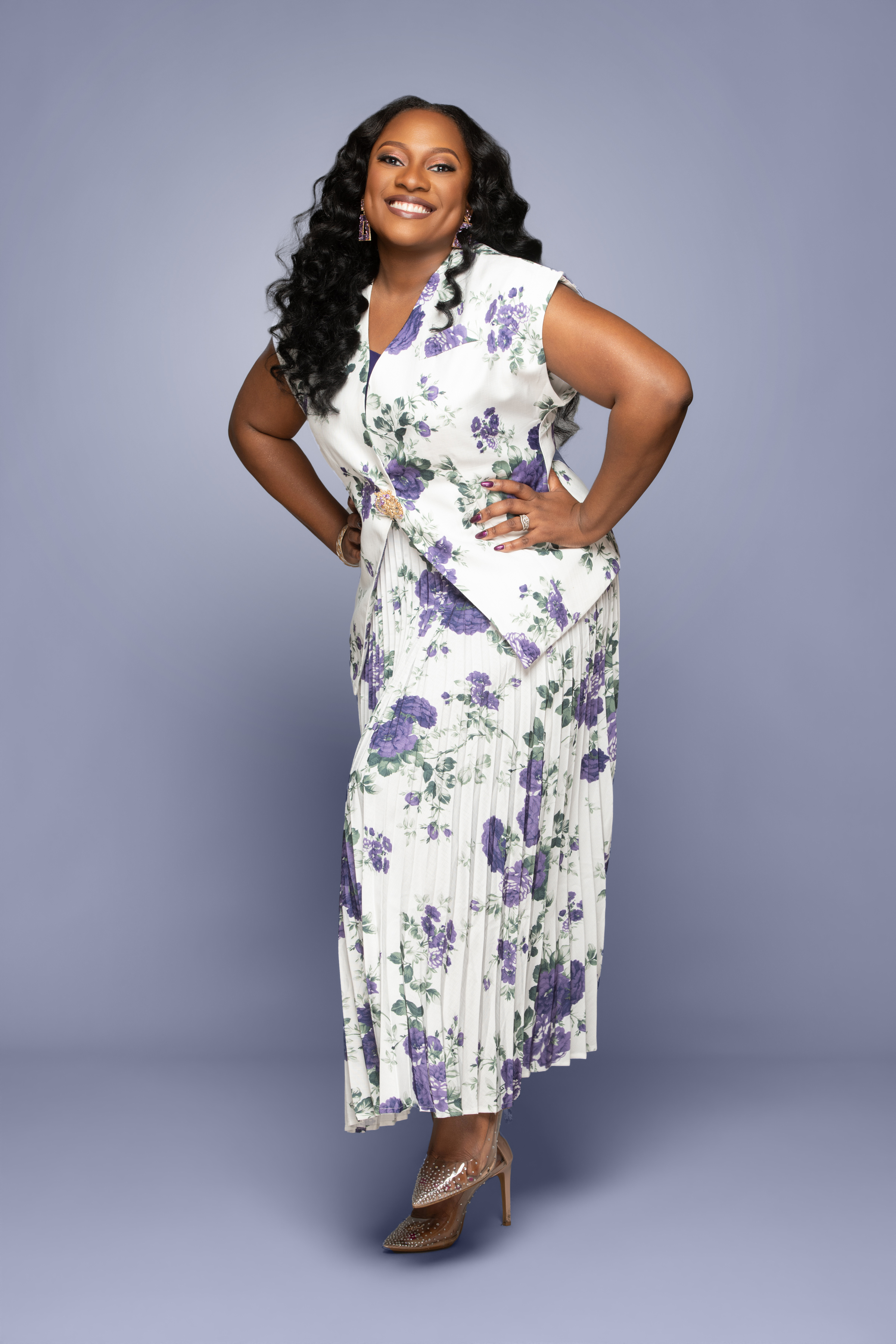
Tell me a little about yourself — who are you, and how do you describe what you do?
I'm very career-focused — that's something I've always been, and it shows in the work I do [around career strategy]. In my day job, I'm a director and assistant professor for undergraduate career development [in higher education].
I'm also a career strategist, and have an independent career development practice called She Leads Beautifully. I support women, usually at the mid-career level and higher, who are looking to transition or evolve their careers — helping them get clear on what's next, package their expertise, tell their story, and leverage their relationships to open doors. My tagline is: I partner with women to help shape the next level of their careers through the power of their relationships.
And outside of work, I'm a wife, a mom — I love being around family and good people. People energize me.
You have a real gift for connecting with people directly, especially on LinkedIn, in a way that doesn't feel transactional. What's your philosophy there?
Honestly, it's the golden rule — treat people how you want to be treated. I know how cliché that sounds, but I know what I don't want to see in my messages, so I don't do that to other people. You hear so many people who talk about LinkedIn, and they get all these spammy messages [from people trying to sell you things]. On my banner, it shows I have a business, so people might immediately have this guard up [asking] “you want to sell me something?” I just want to say “hello, you [sound] really cool,” and we can go from there.
[Also] if I have an ask, I'll tell you exactly why I'm reaching out and why I want your response, and I'll always give the person an out — you don't have to say yes. I think people want to know you're not just some random person with no sense of boundaries. I'm very aware of boundaries; I just tell you why I'm asking [for something].
I also think about relationship levels. In my program, I created the A.C.T.I.V.A.T.E. Framework inspired by [Mark] Granovetter about the strength of weak ties. A lot of people network by going to their strongest relationships, but usually you already know what those people know. It's the people you don't know as well — or you've lost touch with — who have access to things you don't. So knowing where a relationship falls — new, dormant, weak, strong — tells you how big an ask you can reasonably make. I don't follow it to the letter anymore; it's just innate to me now. But ultimately: treat others how you'd want to be treated.
One of the concepts you speak about often that really resonates with me is that sometimes you just outgrow a job title. What does that actually feel like — for you, and for your clients?
The feeling is a loss of joy in the work. Sometimes your identity doesn't match the title anymore — or the title still fits, but something in your life has shifted, and you'd rather be doing something else. That's actually where my first program, More Than the Job Title, came from — I created it by accident, after two clients came to me wanting the same thing at the same time.
For me personally, it started when I lost my job. My identity was tied to that title. My whole family was proud. They’d say “my daughter's a director” everywhere they'd go. And then I didn't have it anymore, and I thought, “I'm not that cool anymore, I'm not a director.” But I had to remind myself: there's so much more to me than that title. The person behind the title never went away. I showed that through my family, through the business I built — I didn't have that particular title, but it didn't take away my value.
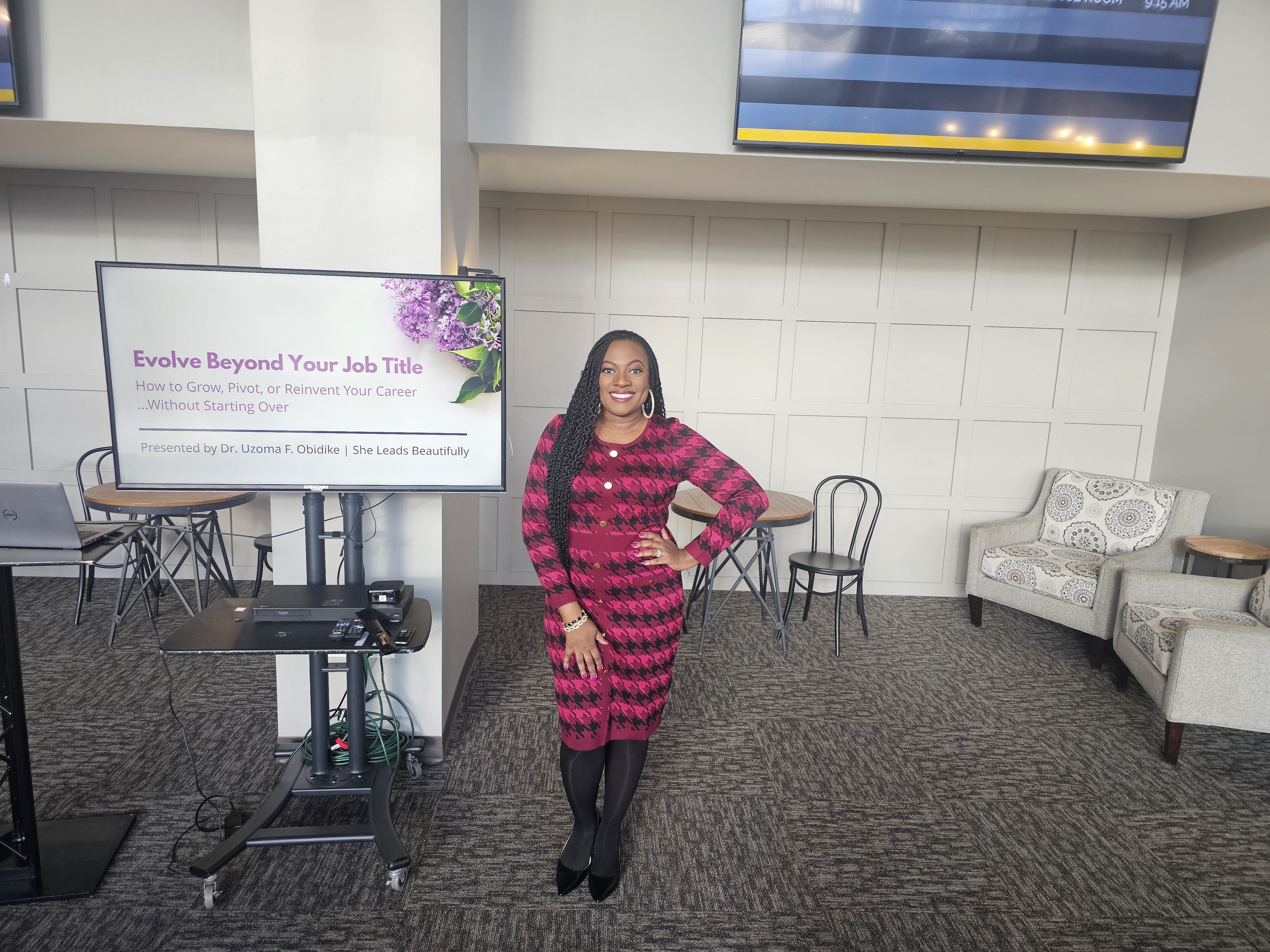
The same thing happened when I took a bridge job — no fancy title, a role that wasn't even fancy on paper — and I didn’t feel valued. I felt capable of much more. We tie so much of our worth to our titles, and it's just not right. That's part of why I struggle with the title "Dr." too — I never want to be the person who insists on "Dr. So-and-so." People have done that to me, and it didn't feel good. I don't ever want someone to feel like I think I'm better than them because of a title.
We hold onto titles because we don't want to lose the status. Sometimes people won't take a new role because it doesn't sound as good, or the pay is lower — but a title or a pay cut can also be the thing that propels you forward. One of my coaches described it like a slingshot: you have to pull back before you can propel forward. That reframed everything for me — I'd been feeling like a failure, but that pulling-back period was exactly what gave me the momentum to get where I am today.
It's so much pressure, and so much of it is unnecessary. I don't even ask "what do you do?" at my First Friday virtual meetups anymore, because it's too loaded. If everyone's a director or a dean, and then someone says "I'm not," it makes them feel like they don't belong. We're all in this space together — that's what I want people to feel.
Sometimes something unexpected happens that forces you to make a call on what matters most. You faced this yourself in your career journey when you made the call not to move for a new job. Can you walk me through that?
A lot of people stay in a role even when they're not happy, unless they're forced out — through a layoff, or some other life event. That's what happened to me. I got laid off, and shortly after, I got married and found out I was pregnant. I found another job, but it was an hour and a half away, and we lived down the street from my parents and my brother's family. I didn't want to disappoint them by telling them we were moving, so I kept it to myself — I figured we'd cross that bridge when we got to it.
Then I lost the pregnancy and had to go through surgery. My whole family was at the hospital, and everyone was so concerned about me — and I remember thinking, why would I give this up just to say I had a job with [a] director title? We’d have to find a new place to live, new support systems, new everything — and I could just as easily get laid off from that job the next year. It wasn't worth it. I'd rather sacrifice a few months to figure out another job situation and stay close to the people I love.
[But] it wasn't just about my own family — my husband was still new to the country. He didn't have any family here; my family was his family, and we have a large Nigerian community in Chicago. If we'd moved somewhere like South Bend, we'd have been fine, but we would have both been miserable.
That changed my whole mindset about careers. In higher ed, we're trained to believe you have to do a national search and go wherever the role is. I decided I didn't want to do that anymore — I'd rather change industries than keep uprooting my family.
I'd already signed on the dotted line — and I called and said I'm not coming…literally from the hospital bed! I felt so bad in the moment, like I'd let [the new employer] down. But in the moment, life [and] family came first, and I have zero regrets.
It was a really tough decision — my whole life could have changed if I'd said yes. But I could tell my husband wasn't happy, and I was so afraid to tell my family — [and] that told me everything I needed to know. I ended up getting a bridge job, and that propelled me to where I am now.
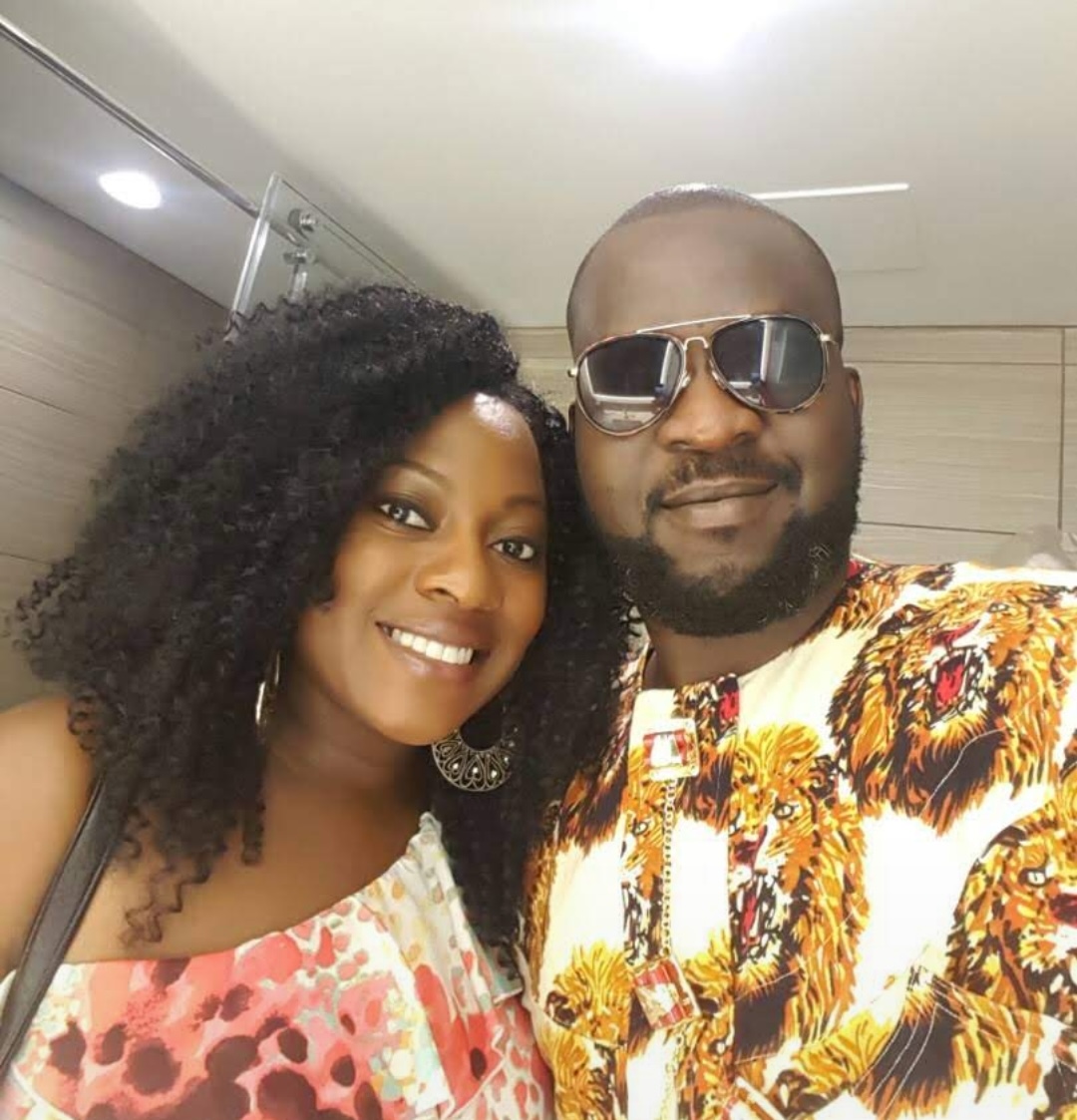
You've described life and career as happening in seasons. How do you know when a season is beginning or ending?
I actually have a framework for this — I call it the S.H.E. Career Seasons, modeled on Dr. Donald E. Super’s Life Career Rainbow. Our careers aren't separate from our lives; they go hand in hand. As we age, the way we operate in our careers shifts too.
The S is for Stable — your career's going fine, you're comfortable, nothing to worry about. Then you start to feel some friction — a problem with your boss, boredom, an itch for something else.
That's when you move into H, Holistic: you start looking at your life as a whole, not just the job. Maybe you're an empty nester, or a baby's coming, or — like me — you lost your job and had surgery after a pregnancy loss. Life events force you to look at your whole picture and ask: do I need this salary, this title, or something else?
Once you've worked through that, you move into E, Evolving — you're actively transitioning: interviewing, networking, showing up. And then, for most of us, you go back to Stable — until life happens again, all the way until retirement.
The whole point is that you never fully get comfortable. At some point something shifts, and you evolve — whether by your own choice or your employer's.
Part of She Leads Beautifully’s mission is to help high-impact women create opportunities that reflect who they are. How do you weigh what you actually want against what others expect of you — especially as a woman?
I think it takes [being] fairly self-aware — and honestly, my advice is different for someone earlier in their career. My clients are mostly mid- to senior-level; they've already tasted success, the salaries, the titles. At that point, I think you have to prioritize what you want — maybe your most immediate family — but not much beyond that.
Looking back at my own example, if it had made more sense for my husband and me to move, we would have — but family was more important to me. You're the one who has to live in this career and this path, so you have to be at peace with it, even if others are unhappy — because it's not their life, it's yours.
I am heavily influenced by my amazing parents and how they’ve lived their lives. They are spending more time in Nigeria now that they are in retirement. They love us, and it's hard, but I have to remember they've spent [decades] here, and Nigeria is still their home in a way [the United States] isn't. It would be so selfish of me to tell them to stay just for the grandkids, when they're at this stage of their life. If their joy is being back home, who am I to stop that? They have raised us and trained us to be able to sustain ourselves, but at the end of the day, they have to do what's right for them. We only get one life, and we have to do what makes us happy and fulfilled.
One of the really unique ways you teach people connection is through your Rose Advisory Collective. Could you tell us more about the Rose Advisory Collective?
On the entrepreneur side, I’ve invested in a lot of business development programs and communities over the years, and I found so much value in the community and the accountability. Even when writing my doctoral dissertation, I was part of a writing group — by that point I was far removed from my cohort, most of them had graduated, and I felt like I was doing it alone. Having that one weekly space made all the difference. I thought I'd have to write every single day to finish, but it was really just that one space of momentum that got me there.
I didn't see anything like that on the corporate career side, so I decided to build it. The Rose Advisory Collective is a 10-week curated personal board of advisors for high-impact women ready to move one strategic career priority forward.
If somebody's in the middle of a season change right now, what would you want them to know?
Embrace it. As hard as it is, it's part of life — we're going to go through seasons. Embrace it, prepare for what's next, and then actually go do the thing — go pursue it. We're not going to stay in the same place forever, as much as we might want to. We're going to evolve and change, so we have to embrace it and go with the flow.
What season are you in right now?
This season, I'm focused on family. I have a young daughter who's six, my husband, a new home — we're building [a home] in Nigeria too. I'm just in love with the life I've been given. Work is here, the business is here, I'm able to do it all, but a huge part of that is my husband's support — he's my biggest cheerleader. Whatever I want to do, he says, let's just do it. I never have to worry about not being supported.
People assume that once you become a mom you can't do certain things anymore, but I have a really good family support system and a really good partner in him — so I want to pour into that, the way my family pours into me. That's my focus this season.
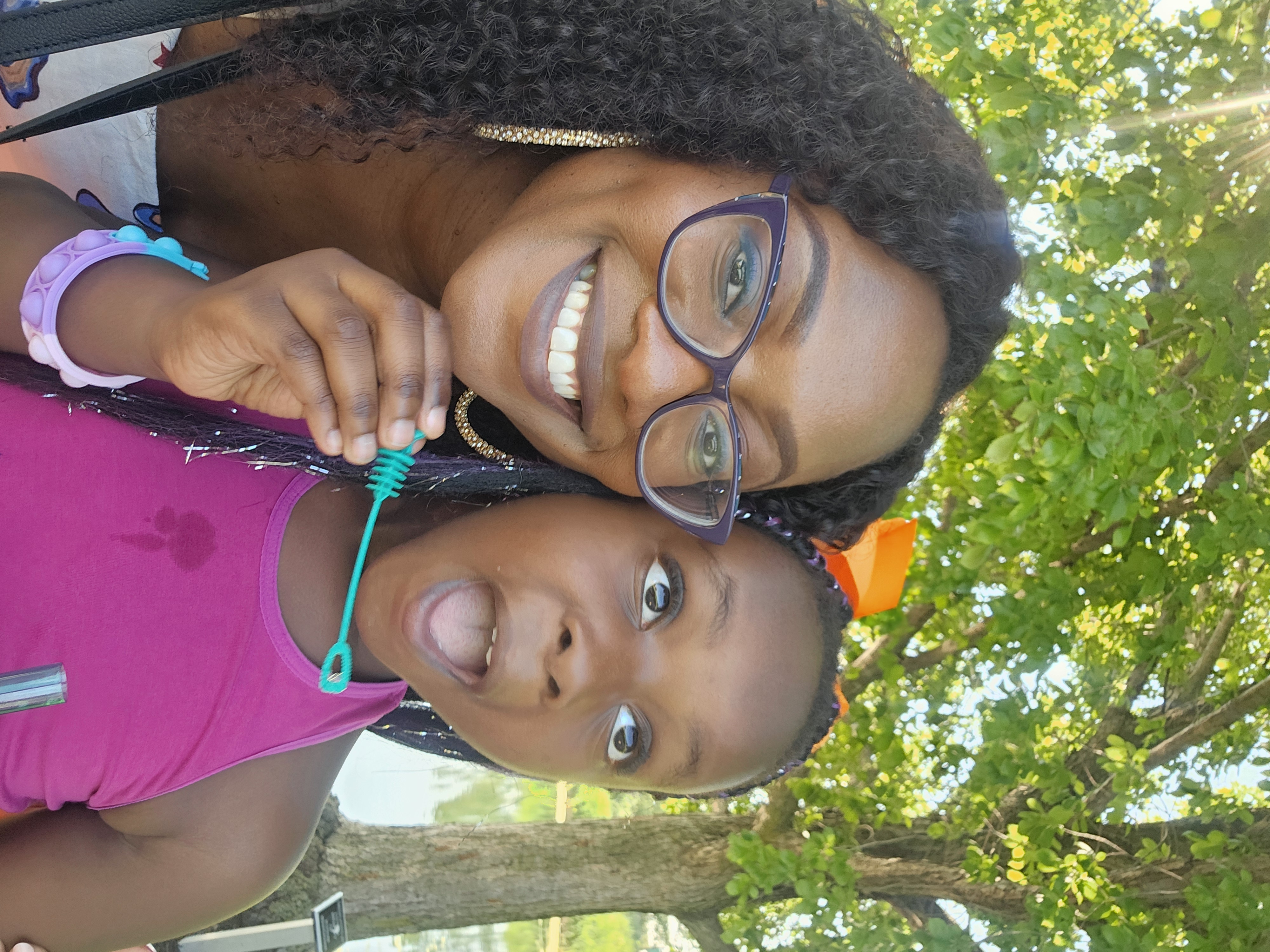
All photos courtesy of Dr. Uzoma F. Obidike. You can learn more about Uzoma and her practice, She Leads Beautifully, at www.sheleadsbeautifully.com. You can learn about Uzoma and her work by tapping in to the She Leads Beautifully community here: https://www.sheleadsbeautifully.com/community. It has career resources, the Tap Into Your Network newsletter, First Friday virtual meetups, and more.